Ambiguous Phage Terms

Stephen T. Abedon

Department of Microbiology – The Ohio State University

phage.org – phage-therapy.org – biologyaspoetry.org


All fields employ specialized terms and at a minimum it is helpful for those individuals working in a field to both know and agree upon what those terms mean. As no doubt is also the case for most or all other fields, in phage biology there are a number terms that nonetheless possess ambiguous meanings. Here I provide both a list and brief discussion of my personal top-ten list of ambiguously defined or otherwise improper phage terms. Note that in many cases it generally is good practice to be aware of and then define ambiguous terms as you use them; this is so that your reader will understand what specific meaning you may be hoping to convey. Here then, in alphabetical order, is my list of top-ten ambiguous phage terms and why I’ve placed them on the list.

  1. Adsorption – This term is not so much ambiguous as potentially covering far too much ground. It can be used to describe the entire process of phage acquisition of a host bacterium, from diffusion through collision with a bacterium, attachment, virion conformational change, and even nucleic acid translocation. Alternatively, it can just mean attachment, though even that can be reversible attachment versus irreversible. In this case actually defining your intended meaning is not necessarily important, though keeping in mind the term’s ambiguous nature can’t hurt.
  2. Capsid – Though scientifically I “grew up” considering the entire phage particle sans the nucleic acid – and sans also the envelope, if present – as the capsid, in fact the capsid can be distinguished, in tailed phages, from the tail. The capsid thus surrounds and serves to contain and protect the nucleic acid and can contrast with other proteinaceous virion appendages which have other functions such as phage delivery into the adsorbed host cell.
  3. Carrier state – Different sub-fields use this term differently. Indeed, almost everybody uses this term with different meanings. If somebody says to you, “Carrier state”, you probably will assume that the intended meaning is whatever it is that you typically think the intended meaning should be. A little piece of advice: Don’t bet large amounts of money on that assumption.
  4. Lysis from without – Lysis from without is a term that almost makes me want to cry. There generally are four definitions used for the term, two of them both correct and distinct and two of them simply are wrong. If a phage particle, particularly when applied in high densities, lyses a target bacterium and does so well prior to the normal end of that phage’s latent period, then that’s lysis from without. If an endolysin is purified and then applied to a bacterium externally, resulting in lysis, then that also is lysis from without. By contrast, if you add large numbers of phages to a bacterium and the bacterium dies, that has almost no meaning except that phages can kill bacteria. As for the fourth usage, if you observe confluent clearing in the course of a spot test, then that’s a zone of inhibition rather than necessarily lysis from without, just like the zones of inhibition that antibiotics produce. Spot formation in fact says absolutely nothing about the lytic behavior of the phage applied other than that the phage in the numbers applied, or even the carrying fluid, can appreciably kill the target bacteria.
  5. Lysogenic phage – Bacteria are lysogenic. That is, if they contain a prophage then they have the potential to generate lysis in a second bacterial strain following the mixing of cultures. What people mean to say when they say lysogenic phage is temperate phage. Lysogenic phage is ambiguous in the sense that it is a misapplied term. Please, just don’t use it.
  6. Lytic phage – So, what is a lytic phage? A phage that lyses bacteria? What kind of information does that supply? That it isn’t a chronically released phage? Is that the intended meaning when “lytic” is used as a qualifier for “phage”? Sometimes, yes it is. Usually, though, the term lytic phage seems to be used to mean non-temperate. The logic of this meaning, however, is not necessarily well worked out since most temperate phages technically are also lytic phages and temperate phages also can lyse cultures of bacteria. Traditionally, people have used the term “Virulent” to describe non-temperate, non-chronically releasing phages. I prefer obligately lytic since the term virulent as applied to phages also, technically, is ambiguous. Nevertheless, in the case of “Virulent phage” there is sufficient tradition that I’ll, at least within the context of this discussion, let this latter concern slide.
  7. Multiplicity of infection – Once upon a time people did phage experiments starting with high bacterial densities and almost all of the phages adsorbed. Thus, multiplicity of infection could be thought of as the ratio of added phages to bacteria. Some careful souls pointed out that you really do need to measure adsorption efficiency before making this claim since the real meaning of multiplicity of infection is literally multiplicity of infection, that is, the ratio of the number of successfully infecting or at least successfully adsorbing phages to the number of target bacteria that the phages had been added to. In the more modern literature, however, people started adding phages to low densities of bacteria and then claimed that this ratio of added phages to target bacteria too is the multiplicity of infection. It’s not. At best it’s the phage multiplicity of addition.
  8. Rise – OK, this one is not something that people generally have problems with since it’s rarely used. Nonetheless, this is my list and the bacteriophage rise is a concept that I care about. The rise traditionally refers to a culture’s increase in phage titer as seen over the course of single-step growth curves (a.k.a., one-step growth curves). The phage titers after a certain point literally rise, hence this is the rise. The rise is not the increase in number of phage virions found inside of bacteria prior to phage-induced bacterial lysis. So far as I know, that latter concept does not actually have a standard, well agreed upon descriptor. As the term “Rise” already exists to describe a different phenomenon, however, it should not be used also within this latter, intracellular context.
  9. Pseudolysogeny – Not only is this term used to describe a multitude of phage phenomena, for the most part we don’t have all that much of a mechanistic understanding of any of them. It is probably a really good idea, therefore, to do one’s best to avoid using this term. But if you must use it, then explicitly and unambiguously define it in terms of what pseudolysogeny means to you. I’ve personally identified literally more meanings of pseudolysogeny than I care to count; see my 2009 reference, below, so that you can count them for me.
  10. Spot versus Plaque – Spots and plaques are not the same thing and a plaque never should be called a spot even though they sort of look like tiny spots. Similarly, a spot should never be called a plaque even though they sort of look like and can even act like giant-sized plaques. The distinction? A plaque is initiated with a single infective center, that is, approximately a point source of subsequent phage production. A spot is initiated with multiple infective centers, that is, multiple point sources of potential phage production that converge into a single zone of clearing. In addition, while plaque formation is absolutely dependent on productive phage infections (those infections that produce phage virions), a spot can form solely by killing bacteria, i.e., without also producing phage progeny.

And here’s a bonus term: Abortive infection. Just so that everybody is on the same page, the ability of some phages under some conditions to form spots without also producing new phages is a consequence of phages killing bacteria without also going through a normal infection cycle. That is, an abortive infection. Confusingly, lysis from without, in its original meaning (i.e., as listed first, above) is a form of abortive infection. Even more confusing, the means by which abortive infections are assayed, using measurements of what is known as efficiency of plating, can include not just phages that kill bacteria without also producing new phages but also phages that kill bacteria while producing new phages but not, under the same conditions, enough new phages to also produce plaques. I describe the latter as a “Reduced infection vigor”. Ecologically that distinction is an important one but more important is to realize that there exist numerous examples of phages killing bacteria without necessarily also vigorously producing new phages.

Presumably there are additional ambiguous phage terms out there and if I thought about it further, then I probably could ID a few more as well. Others also will have their own personal pet peeves which they too might consider blogging about. In any case, don’t forget that it can be helpful to define your terms as you use them. Done properly, then your audience will know what you mean. Your meaning might not be their meaning, but in theory at least nobody can complain if you explicitly explain exactly what it is that you are trying to say.

Further reading:

Abedon, S. T. (2009). Disambiguating Bacteriophage Pseudolysogeny: An Historical Analysis of Lysogeny, Pseudolysogeny, and the Phage Carrier State. In: Contemporary Trends in Bacteriophage Research. Adams, H. T. (ed), Nova Science Publishers, Hauppauge, New York, 285-307

Abedon, S. T. (2011). Lysis from Without. Bacteriophage 1(1):46-49. [PubMed link]

Hyman, P., Abedon, S. T. (2009). Practical Methods for Determining Phage Growth Parameters. Methods in Molecular Biology 501:175-202. [PubMed link] (for consideration of the phage multiplicity of infection and rise)

Hyman, P., Abedon, S. T. (2010). Bacteriophage Host Range and Bacterial Resistance. Advances in Applied Microbiology 70:217-248. [PubMed link] (for consideration of abortive infections)

See also the terms list found in phage.org.
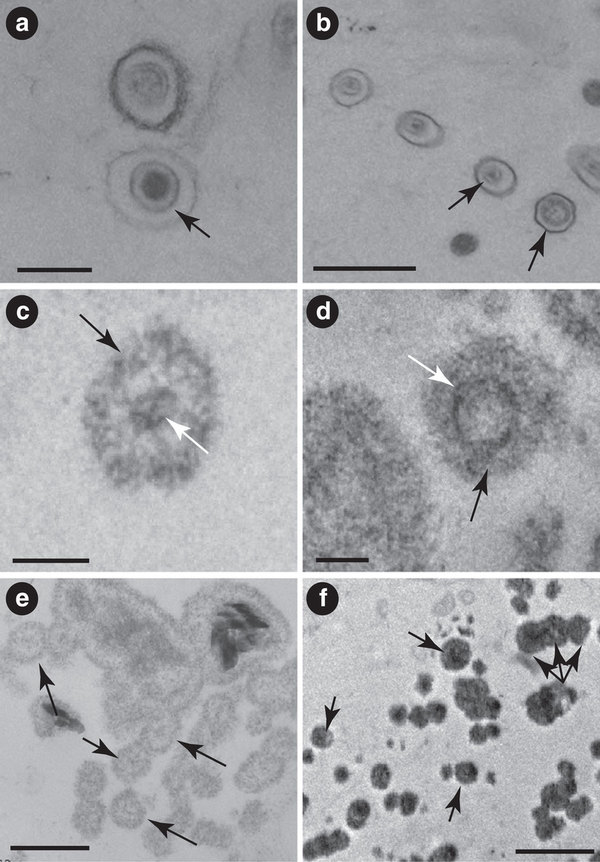
Fossilized viruses found in the geological record

In the 90s there was a notion that was inexplicably popular in the literature (Folk, 1993; Folk and Lynch, 1997; Pedone and Folk, 1996; Sillitoe et al., 1996; McKay et al., 1996; Vasconcelos and McKenzie, 1997; Kajander and Çiftçioglu, 1998), and still stubbornly held by some, that the distinct structured particles under 150 nm in size commonly found in the geological record associated with putatively biogenic rock constituted a new form of “nanobacteria,” despite being too small to support living systems and based on often poorly labelled micrographs. How much the controversy this engendered unknowingly recalled the classical extended fights over Martinus Beijerinck‘s contagium vivum fluidum and the original discovery of viruses may seem obvious only in hindsight, but a new paper now convincingly argues that many of these particles may indeed be fossilized viruses of microbes,

Viruses as new agents of organomineralization in the geological record

Muriel Pacton, David Wacey, Cinzia Corinaldesi, et al. Published 2014 in Nat. Commun. doi:10.1038/ncomms5298
Viruses are the most abundant biological entities throughout marine and terrestrial ecosystems, but little is known about virus–mineral interactions or the potential for virus preservation in the geological record. Here we use contextual metagenomic data and microscopic analyses to show that viruses occur in high diversity within a modern lacustrine microbial mat, and vastly outnumber prokaryotes and other components of the microbial mat. Experimental data reveal that mineral precipitation takes place directly on free viruses and, as a result of viral infections, on cell debris resulting from cell lysis. Viruses are initially permineralized by amorphous magnesium silicates, which then alter to magnesium carbonate nanospheres of ~80–200 nm in diameter during diagenesis. Our findings open up the possibility to investigate the evolution and geological history of viruses and their role in organomineralization, as well as providing an alternative explanation for enigmatic carbonate nanospheres previously observed in the geological record.

While the authors seem primarily concerned with how viruses could affect the chemical formation of geological features, if real, this has the exciting potential to allow us to track the evolution of viral morphology through geological time.

Figure 2(a) Virus-like particle characterized by an icosahedral capsid-like structure (black arrow). Scale bar, 200 nm. (b) Virus-like particles. Black arrows point to the capsid-like structure in each case. Scale bar, 500 nm. (c) First stage of the amMg-Si mineralization process of the icosahedral capsid-like structure (black arrow); white arrow points to the viral DNA inside. Scale bar, 100 nm. (d) Second stage of the amMg-Si mineralization process of a virus-like particle (black arrow) showing its icosahedral capsid-like structure (white arrow). Scale bar, 100 nm. (e) Early mineralization of virus-like particles showing amMg-Si permineralized capsid-like structures (arrows). Scale bar, 200 nm. (f) amMg-Si permineralized virus-like particles occurring as single entities and chains (examples arrowed). Scale bar, 500 nm.


Phage Therapy Case Study from 1936

Stephen T. Abedon

Department of Microbiology – The Ohio State University

phage.org – phage-therapy.org – biologyaspoetry.org


This article can’t be found via a PubMed search but can be found here: jama.jamanetwork.com/article.aspx?articleid=1156439. It is not free, but most of it can be found on that page. The reference is Morrison, S., Gardner, R.E. (1936). The Treatment of a Lung Abscess due to Bacillus coli with a Lytic Filtrate. JAMA 107(1):33-34. It is a fascinating account because it walks you through the case in some detail plus presents both efficacy and side effects, neither of which can be unquestionably attributed to the phage itself since the formulation used was not purified. Still, pretty amazing stuff, and I quote:

N, S., a woman, aged 22, who had previously been in excellent health, suddenly experienced a severe diffuse abdominal pain, Aug. 5, 1934… On the third day the patient’s condition became critical and she was rushed to the Chambersburg (Pa.) Hospital, where an emergency operation was performed by Dr. L. H. Seaton. When the abdomen was opened a gangrenous appendix with generalized peritonitis was disclosed. The remainder of the appendix was removed and drains were inserted…

[Approximately one month later,] after an excruciating pain, examination disclosed massive collapse of the left lung. During the subsequent few days slight signs of partial return of pulmonary function were observed, but relapse followed. Clinical and x-ray signs of effusion developed. Aspiration was performed September 12 and 500 cc. of very heavy purulent material with a foul and typical colon odor was obtained. A culture of the pus at this time yielded only Bacillus coli. Three days later, because the material was too thick to be aspirated, rib resection was done with a virtual gush of pus. A bronchial fistula developed shortly after the rib resection and the patient was expectorat¬ ing the same kind of material as that which drained from the resection wound. The appearance of the area around the resection opening was necrotic and “mossy” and failed to show any improvement on local irrigations with 1,000 cc. of saline solution twice a day. Digital examination through the resection wound disclosed many walled off abscesses surrounded by necrotic tissue. In view of the hectic fever and the general condition, which indicated toxic absorption, an especially resistant abscess which failed to open was incised by an approach between the ribs just above the rib resection. A drain was inserted and in a few days healing took place.

A second sample of pus was collected at this time (September 16) and another pure culture of colon bacillus isolated which was fairly readily lysed by a bacteriophage that was active against various strains of B. coli isolated from other sources.

After a cutaneous test September 20 of 0.1 cc. of the lytic filtrate twelve hours previously had given little or no reaction, and after irrigating the chest with 1 liter of physiologic solution of sodium chloride, 1 ounce (30 cc.) of the phage was instilled and allowed to remain for two hours. This was followed saline irrigation and the wound covered by a dressing saturated with the bacteriophage. The following day the observation was made that the discharge had become thin and watery and had lost its offensive character for the first time since the resection was done five days before, even though saline irrigations had been administered twice daily during this five day period. A second and equally remarkable change had occurred at the resection wound itself, where the mossy, necrotic character was entirely changed to a clean, fresh, healthy appearing incision.

Since the first use of bacteriophage had given such excellent results, a second application seemed indicated, and therefore the procedure was repeated. However, within ten minutes a violent generalized rose-colored urticaria appeared and the patient complained of nausea and vomited. The bacteriophage was drained immediately and the chest irrigated with large quantities of saline solution. Epinephrine was administered…

After such a marked allergic reaction to the bacteriophage had occurred it was decided to discontinue bacteriophage instillations and continue only with saline irrigations and external dressings saturated with bacteriophage. The dressings of bacteriophage were continued for a week along with irrigations of physiologic solution of sodium chloride. Throughout this period the resection wound maintained its healthy normal appearance and the discharge remained clear, watery and nonodorous. The temperature reached 102.2 F. each day for the thirteen days prior to the urticarial reaction. On that day the reading was 103.2 F. after the reaction. After this reaction the temperature did not go above 102.2 F.

The patient’s general condition was remarkably improved and within six weeks she was able to leave the hospital. The appendiceal wound had healed but the fever, less hectic in type, continued as well as the thin nonodorous drainage. At home the fever gradually subsided as well as the drainage, and heal¬ ing was practically complete toward the end of December.

Whether the bacteriophage acted as a specific or indirectly as a Synergist to antibody formation cannot be stated.

Thus, no proof of explicitly phage-mediated efficacy, no proof that the condition would not have spontaneously reversed on its own, and no controls, but instead a remarkable result, with an indication as well of reason for caution regarding potential immunological reactions perhaps associated with the lack of formulation purification. Interesting indeed!

Bacteriophage-based synthetic biology for the study of infectious diseases

An interesting new short paper out of Tim Lu’s synthetic biology lab showcasing what bacteriophage can bring to the table,

Bacteriophage-based synthetic biology for the study of infectious diseases

Robert J Citorik, Mark Mimee, and Timothy K Lu Published 2014 in Curr. Opin Microbiol. DOI: 10.1016/j.mib.2014.05.022

Since their discovery, bacteriophages have contributed enormously to our understanding of molecular biology as model systems. Furthermore, bacteriophages have provided many tools that have advanced the fields of genetic engineering and synthetic biology. Here, we discuss bacteriophage-based technologies and their application to the study of infectious diseases. New strategies for engineering genomes have the potential to accelerate the design of novel phages as therapies, diagnostics, and tools. Though almost a century has elapsed since their discovery, bacteriophages continue to have a major impact on modern biological sciences, especially with the growth of multidrug-resistant bacteria and interest in the microbiome.

•Multidrug-resistant infections have sparked a renewed interest in bacteriophages.
•Synthetic biology has enabled technologies for next-generation phage engineering.
•Engineered phages and derived parts constitute a new antimicrobial paradigm.
•Bacteriophage-based reporters permit detection of specific pathogens.
•Components from phage form a core set of parts in the synthetic biology toolbox.

Bacteriophage - Synthetic Biology

A Quote or Two from Hoeflmayr (1963): “Inhalation Therapy Using Bacteriophages in Therapy-Resistant Infections”

Stephen T. Abedon

Department of Microbiology – The Ohio State University

phage.org – phage-therapy.org – biologyaspoetry.org


I just came across this “report”, which can be found here:

http://www.dtic.mil/cgi-bin/GetTRDoc?Location=U-2&docGetTRDoc.pdf&AD=AD0837021

This dates from 1963, I believe as a translation, and the full citation is “Inhalation Therapy Using Bacteriophages in Therapy-Resistant Infections”. Fortschritte der Biologischen Aerosol-Forschung-Jahren 1957-1961 (Progress of the Biological Aerosol Research-Years 1957-1961), pp. 403-409. See under “Further reading” for what presumably is the original and/or complete citation.

At any rate, this paper/chapter/publication/translation/report has some interesting passages.

In view of the growing resistance against antibiotics, it is vitally important that we try to find ways to counteract this development. … Farsighted clinicians warned us as long as 10 years ago, when we were still students, that we should not hastily treat any little infection with penicillin.
If we should discover any-new possibilities for treating infections, then we should look at these possibilities only from the angle that such a therapy would have to preclude the formation of resistance as much as possible, therapy with bacteriophages fills the requirement. The fact that this therapy has so far met with skepticism is due to the results which, until a few years ago, did not ome up to expectations
[Schaefer, W., “Contribution on Epidemic Control” Vol. 3, Hippocrates, Stuttgart, 1948]. If we try to track down the reason for the failure of the earlier bacteriophage therapy, we will find that this was mostly due to the biological properties of the phages.
Now it is important to know that the bacteriophage has high specificity. Therefore, therapy can be effective
only If the administered phage encounters its homologous bacterium.
The disadvantage of our earlier phage preparations was to be found not only in the inadequate breeding methods but above all in the fact that only about 1-2 phage strains were available. If we consider the large number of pathogenic bacteria strains, which play a role even in a very simple infection or which at least at times might play a role, then we would have to set up two requirements. First of all, in order to have a wide range of effectiveness, such a therapeutic substance would have to contain a large number of various phage strains. Second, it is necessary that phages which would come into consideration for therapy should have sufficient virulence with regard to pathogenic viruses.
We used the preparation (Diriphagen ® Dr. Heinz Haury Chemical Plant, Munich) because we believed that this preparation met the requirements we just set up. According to Information received, this reparation contains 180-200 different phage strains and thus has a broad spectrum of effectiveness. In addition, it also contains so-called aimed antimicrobics which act against those bacteria that reveal primary phage resistance. We might note here that both the phage components and the added microbics in every ampule are standardized and meet the requirements for biological standardisation as regards phage effect [Penso, G., and Ortali, V., Arch. belges Med. Soc., 1, 1959]. If we mention the two therapeutic components, that is the bacteriphages and aimed (directed) antimicrobics, we are really not fully describing the effects mechanism as such. We have a third factor here. What we are dealing with here is the stimulation of the inherent defenses of the body which are bound to be aroused and which are based on the following: In breeding phages and antimicrobics, the pathogenic microbes used for this purpose give rise to lysates. But these lysates are not eliminated; instead they are also fed into the body. They act like antigens and lead to the formation of antibodies which in turn are specifically directed against the bacteria to which lyntes were added [Glauser, H. A., Med. achr., 13, 420, 1959.]. This reaction requires a latency period of about 8-10 days. The value of this antibody formation is hard to estimate in the individual case. We can get some specific figures on this only if we determine the phagocytosis capability; but this must be done in the clinic. Any new therapy is very often impaired by the fact that we do not employ it until other, more familiar measures have failed. We must admlt that we did not use Deriphagen until we had some patients in whom other preparations had not produced success. This is further by reports from other authors who achieved surprisingly good results with this preparation [Cevey, M., Schweiz. Z. Tuberk. (Swiss Tuberculosis Joural),
15, 34, 1958; Corbelli, G., Bologna Med., 6, 57, 1959; Delacoste, P., Rev. suisse Med., August 1959; Schaefer, W., “Contribution on Epidemic Control” Vol. 3, Hippoprates, Stuttgart, 1948].

Figure 1 shows the result of our treatment. The first column shows the total number of all patients treated; then we have the number of patients cured which abounted to 55.1%; then we cow to those who showed substantial improvement and on the right we have those patients who did not improve as a result of therapy [34.8%].

The author notes, however, that there is a discrepancy between microbiological and clinical results. That is, patients apparently reported a return to healthfulness but this did not coincide with elimination of pathogen, which the author seems to suggest is a consequence of phage- resistant forms not being pathogenic.

The text in the PDF then essentially fades away, though the main text of the paper continues on for two more pages!

Further reading:

Hoeflmayr, J. (1962). Inhalationstherapie mit Bakteriophagen bei therapieresistenten Infektionen [Inhalation Therapy with Bacteriophages for Treatment-Resistant Infections]. Fortschritte der biologischen Aerosol-Forschung in den Jahren 1957–1961 [Advances in Biological Aerosols Research in the Years 1957–1961].  403-409. 1962. (I believe this is the original reference)

Abedon, S. T., Kuhl, S., Blasdel, R., Kutter, E. M. (2011). Phage Treatment of Human Infections. Bacteriophage 1(2): 66-85. [PubMed link] (this article provides further historical context on European use of phage therapy, though note that description of a German tradition in that article is completely lacking and so far as I am aware was unknown to the authors at the time of its writing)

Bacteriophages, Spatial Structure, and the Joys and Limitations of a Swiss Pass

Stephen T. Abedon

Department of Microbiology – The Ohio State University

phage.org – phage-therapy.org – biologyaspoetry.org

(This essay was written while touring Switzerland by train, July, 2014)


Travel can be joyous but also can involve a lot of work. The basic premise of travel is movement, whether specifically from one destination to another or instead something more random. In either case it takes time for you to move from that one place to another. Even the exploration of a smallish country therefore can take enormous amounts of time, since each of numerous legs of your journey will take some amount of time to traverse. You can purchase a Swiss Pass, and explore much of Switzerland over days and even weeks. You’ll see a lot, but you certainly will see far from everything. These temporal delays that are manifest as you travel are one of things that makes traveling difficult, but at the same time this relative slowness can be what makes a journey worthwhile. If you flittered from place to place at the speed of light, never pausing, you would touch upon much more, but your experience would be far different. Indeed, there are qualitative differences between your experiences as you fly, drive, take a train, ride a motorcycle, ride a bike, walk, or indeed not move at all.

Spatial structure is a property of environments in which delays in movement exist. If you can instantaneously and randomly be anywhere, then there is no spatial structure. In microbiology, spatial structure is seen especially under circumstances that do not substantially involve turbulent flow. When you shake a broth-filled flask, one of the consequences of that action is to reduce spatial structure. In terms of interactions between predators and prey, of bacteriophages and bacteria, the result is that any one individual may interact with any other individual with equivalent probability. If you replace any collision between phages and bacteria with the special kind of interaction that is sex, then you have random mating. If you replace any collision with the special kind of interaction that is phage infection of bacteria, then you have random infection. Either case is implicitly a consequence of a lack of spatial structure in the environment.

Spatial structure generally is what happens within environments almost no matter what. You can strive to remove spatial structure, such as via the shaking or stirring of broth, but absent such measures, or indeed if volumes are large enough and mixing slow enough, then some spatial structure nonetheless will be retained. A static microcosm – where the mixing of broth is reduced essentially to zero and therefore where movement is dominated by either motility or diffusion – thus can represent a spatially structured environment. More obvious is the spatial structure that occurs when movement is reduced even further, as is the case with the addition to environments of various thickening agents such as agar.

In phage biology the classic laboratory-observed consequence of spatial structure is the formation of phage plaques, which are clearings within otherwise turbid bacterial cultures, ones that have been spread or poured onto agar plates. The formation of a plaque requires three processes: phage population growth, phage-mediated reduction of bacterial densities, and, crucially, limitations in phage as well as bacterial movement.  Generally a plaque begins with a single plaque forming unit (PFU) which consists of an infective center and in turn can be either an individual phage virion, a clump of phage virions, a phage-infected bacterium, or a clump of bacteria at least one of which is phage infected. This infective center serves as a point source for the outward but nonetheless slow diffusion of phage virions away from their origin. The movement is outward only because the random process of diffusion tends to result in a broadening of the “cloud” of diffusing particles. Because of limitations on the rate of this movement, however, the cloud remains relatively small: the confluent lysis of an entire plate via the growth of a single plaque generally does not occur.

The phage is you. You can start a family and outfit each member of your family with a Swiss Pass. But unless your explorations of the amazing beauty that is Switzerland occurs over extremely long periods, then your and your family’s potential to see all of Switzerland will be relatively limited. This is less true, however, if your family is very large, so large that at least one family member is present to explore each place that may be explored. In this case complete exploration of a discrete area may be achieved. Your ability to explore broader areas nevertheless will be limited at least in part by how long it takes you or your family to get there.

Further reading:

Abedon, S. T., Bartom, E. (2013). Plaques. Brenner’s Encyclopedia of Genetics. Maloy, S., Hughes, K. (eds). Academic Press, pp. 357-357.

Abedon, S. T., Yin, J. (2009). Bacteriophage Plaques: Theory and Analysis. Methods in Molecular Biology 501:161-174. [PubMed link]

Abedon, S. T., Yin, J. (2008). Impact of Spatial Structure on Phage Population Growth. In: Bacteriophage Ecology, Abedon, S. T. (ed), Cambridge University Press, Cambridge, pp. 94-113.

For videos of my explorations of Switzerland, as well as other aspects of my existence, see youtube.com/channel/UCf0uLeBfCToHT3eAoYFmcNA.

crAssphage

A new study led by researchers at San Diego State University has found that more than half the world’s population is host to a newly described virus, named crAssphage, which infects one of the most
common gut bacterial species, Bacteroides. This bacterium is thought to be connected with obesity, diabetes and other gut-related diseases.

Big fleas have little fleas, Upon their backs to bite ’em, And little fleas have lesser fleas, and so, ad infinitum.

One of the many problems farmers of various kinds of legumes need to deal with is the pea aphid, which reproduce incredibly fast and live by sucking the sap out of the plants. However, while they are terrifying parasites of legumes, they have their own yet more horrific parasites, a parasitoid wasp. Below is a really nice close up picture of one doing its thing, here is a video of the act, and here is a brain meltingly horrific video of a dissection of the mummified aftermath 8 days later. Essentially, these wasps deposit their eggs in a pea aphid and the growing larva feeds on it, developing there for about a week, and then consuming the host from the inside out like a Xenomorph. When it’s done, the wasp larva dries the aphid’s cuticle into a papery brittle shell and an adult wasp emerges from the aphid mummy. Legume farmers love these wasps as much as they despise the aphids that destroy their crops, however, when farmers noticed that the wasps didn’t work as effectively on all of aphids infestations, Nancy Moran’s group at the University of Texas in Austin went to work figuring out why. It turns out that all aphids have a primary bacterial endosymbiont living inside their cells, in addition to and much like a mitochondria, and that many have some combination of five other known secondary endosymbionts. Interestingly, two of those other five, Hamiltonella defensa and Serratia symbiotica have been shown to confer varying levels of resistance to the parasitoid wasp, allowing the aphid to survive infection. However, it turns out that there is yet one more layer to this story,

The relationship these endosymbionts have with the aphid, as well as the primary endosymbiont, is hard to classify as they confer a fitness cost in the absence of the wasp but a significant fitness boost when the wasps are around and trying to infect the aphids. At least for H. defensa, the reason why some strains are fully parasitic and provide no protection against the wasps while others are at least plausibly commensal and do provide protection, is a bacterial virus that infects the endosymbiont, even while it is inside the eukaryotic aphid cell. To understand why it will require a bit of knowledge of how some bacteriophages work. Most bacterial viruses, also known as bacteriophages, have a clear dividing line between two strategies. The simplest and most virulent phages will always immediately shut down their host’s metabolism upon infection and replace it with their own. Within a short period of time, generally between 20 and 80 minutes, the phage will have used the host cell to replicate its genome, build new viral particles, packed those particles with the genome and lysed the cell; setting loose 30-3000 new inert infectious particles. These are known as obligately lytic phages. Most phages however, use a mix of this strategy and another one known as lysogeny. These temperate phages will, at the beginning, decide to either virulently infect, producing particles at the total expense of the host, or hide in the host’s genome and inactivate all of its many host lethal genes. Generally it does this by expressing a transcriptional repressor that prevents expression of everything but the repressor, which incidentally protects the host from subsequent infection by related phages. However, some temperate phages will allow for expression of a genomic cassette that will perform some function of benefit to their host – they might as well since they are completely dependent on their host’s wellbeing while in this stage of their life cycle.
It turns out that there is a temperate bacteriophage called APSE, which is common in H. defensa populations in the aphids, that encodes for a cassette of genes that causes H. defensa to attack the wasp larvae with vicious toxins while the phage hides in the genome of its bacterial host. This makes for a really fascinatingly complex system of interdependencies for each of the agents involved. The phage, the bacterial symbiont, and the aphid are all each united in their interdependent need to combat the wasp that kills all three when it succeeds. However, at the same time, both the phage and the bacteria are dependent on the wasp to apply pressure on the aphid to keep them around – otherwise the aphid would cure itself of both creatures that would then be free-loading. Additionally, the wasp the bacteria, and the phage are all completely dependent on the aphid’s sap sucking ability to sustain them, and the aphid is totally dependent on the farmer to continue growing legumes in massive vulnerable monocultures. Furthermore the farmer and the legumes are dependent on the wasp to combat the aphid and largely helpless against the bacteria and the phage. At the same time, despite all of the interlocking incentives toward cooperation, there are also incentives towards each of these agents cheating each other. The farmer has an incentive to ‘cheat’ and save money by neglecting to buy aphid mummies every so often, because they still benefit from the fitness cost caused by the aphid not rejecting the bacteria or the bacteria rejecting the phage. Similarly, the aphid has an incentive to cheat both the bacteria and the phage to cure itself of them and bet on the farmer not buying aphid mummies full of wasps that year. The bacteria also has an incentive to cheat the aphid by curing itself of the phage, and also bet on the farmer not buying mummies that year itself.
What I love most about this story is that complex series of interdependent yet competing evolutionary interests, which forms as an emergent property of the Siphonaptera – this blog’s namesake,

Big fleas have little fleas, Upon their backs to bite ’em, And little fleas have lesser fleas, and so, ad infinitum. And the great fleas, themselves, in turn Have greater fleas to go on; While these again have greater still, And greater still, and so on.

It is much like another wonderful paper, where a woman’s eye is a big flea bitten the smaller flea of an Acanthamoeba polyphaga parasite,  which is in turn bitten by its Mimiviridae (Lentille virus), which is bitten by its virophage (Sputnik 2), which is itself in a sense bitten by its mobile genetic elements. We have a situation where the farmer is a big flea bitten by their legume, which is bitten by its aphid, which is then bitten by both its parasitoid wasp and its secondary endosymbiont, which is in turn then bitten by its temperate bacteriophage.

This post is deeply indebted to one made on Moselio Schaechter’s excellent blog Small Things Considered, which is slightly more technical and no doubt more clearly written.

Bacteriophages encode factors required for protection in a symbiotic mutualism

Oliver KM, Degnan PH, et al. Published 2009 in Science doi: 10.1126/science.1174463  [REQUIRES FREE REGISTRATION]

Bacteriophages are known to carry key virulence factors for pathogenic bacteria, but their roles in symbiotic bacteria are less well understood. The heritable symbiont Hamiltonella defensa protects the aphid Acyrthosiphon pisum from attack by the parasitoid Aphidius ervi by killing developing wasp larvae. In a controlled genetic background, we show that a toxin-encoding bacteriophage is required to produce the protective phenotype. Phage loss occurs repeatedly in laboratory-held H. defensa–infected aphid clonal lines, resulting in increased susceptibility to parasitism in each instance. Our results show that these mobile genetic elements can endow a bacterial symbiont with benefits that extend to the animal host. Thus, phages vector ecologically important traits, such as defense against parasitoids, within and among symbiont and animal host lineages.

The players in a mutualistic symbiosis: insects, bacteria, viruses, and virulence genes.

Moran NA, Degnan PH, et al. Published 2005 in PNAS USA, doi:10.1073/pnas.0507029102

Aphids maintain mutualistic symbioses involving consortia of coinherited organisms. All possess a primary endosymbiont, Buchnera, which compensates for dietary deficiencies; many also contain secondary symbionts, such as Hamiltonella defensa, which confers defense against natural enemies. Genome sequences of uncultivable secondary symbionts have been refractory to analysis due to the difficulties of isolating adequate DNA samples. By amplifying DNA from hemolymph of infected pea aphids, we obtained a set of genomic sequences of H. defensa and an associated bacteriophage. H. defensa harbors two type III secretion systems, related to those that mediate host cell entry by enteric pathogens. The phage, called APSE-2, is a close relative of the previously sequenced APSE-1 but contains intact homologs of the gene encoding cytolethal distending toxin (cdtB), which interrupts the eukaryotic cell cycle and which is known from a variety of mammalian pathogens. The cdtB homolog is highly expressed, and its genomic position corresponds to that of a homolog of stx (encoding Shiga-toxin) within APSE-1. APSE-2 genomes were consistently abundant in infected pea aphids, and related phages were found in all tested isolates of H. defensa, from numerous insect species. Based on their ubiquity and abundance, these phages appear to be an obligate component of the H. defensa life cycle. We propose that, in these mutualistic symbionts, phage-borne toxin genes provide defense to the aphid host and are a basis for the observed protection against eukaryotic parasites.

It Sometimes Rains Nonsense After Hurricanes

Today I want to talk about a paper that looks incredibly cool in a whole bunch of different ways in the abstract, introduction, and discussion but for whom much of that awesomeness falls apart under closer inspection of the results, methods, and context.  In it, the authors report their results having flown in NASA’s venerable old DC-8 across the US and down the west coast as well as through a couple of hurricanes with a filter designed to capture bacteria sized particles hanging out the side.  They then took the filter and analyzed it with fluorescent dyes and microscopes as well as genomically to see what was there.  In their paper they appear to arrive at five different major conclusions: that viable bacterial cells represented on average around 20% of the total particles in the 0.25- to 1-μm diameter range; that 60 to 100% of the 1.5 × 10⁵ cells m−3 they saw were viable; that bacteria are at least two orders of magnitude more abundant than fungal cells in the troposphere; and that fecal coliforms represent a significant amount of the microbiota of hurricanes after landfall. Additionally, what has made the most splash though, is their speculation that because some of the taxa they determined were present by small subunit rRNA sequencing had been shown to metabolize oxalic acid, a major chemical component of clouds, it was plausible that there was active bacterial metabolism happening in the clouds they analyzed.  Unfortunately, despite the journal it is published in and glowing praise from excellent blogs like Not Exactly Rocket ScienceClimate CentralWiredMetafilter, and The Scientist, the speculation is pretty foolish and each of these conclusions is either inherently false, actively misleading, or very difficult to support with their data.

SnoopyWhat I’d love to do with the Authors’ platform


Here is the paper:

Microbiome of the upper troposphere: Species composition and prevalence, effects of tropical storms, and atmospheric implications

N DeLeon-Rodriguez, TL Lathem, LM Rodriguez-R, et al. Published 2013 in PNAS. doi: 10.1073/pnas.1212089110
The composition and prevalence of microorganisms in the middle-to-upper troposphere (8–15 km altitude) and their role in aerosol-cloud-precipitation interactions represent important, unresolved questions for biological and atmospheric science. In particular, airborne microorganisms above the oceans remain essentially uncharacterized, as most work to date is restricted to samples taken near the Earth’s surface. Here we report on the microbiome of low- and high-altitude air masses sampled onboard the National Aeronautics and Space Administration DC-8 platform during the 2010 Genesis and Rapid Intensification Processes campaign in the Caribbean Sea. The samples were collected in cloudy and cloud-free air masses before, during, and after two major tropical hurricanes, Earl and Karl. Quantitative PCR and microscopy revealed that viable bacterial cells represented on average around 20% of the total particles in the 0.25- to 1-μm diameter range and were at least an order of magnitude more abundant than fungal cells, suggesting that bacteria represent an important and underestimated fraction of micrometer-sized atmospheric aerosols. The samples from the two hurricanes were characterized by significantly different bacterial communities, revealing that hurricanes aerosolize a large amount of new cells. Nonetheless, 17 bacterial taxa, including taxa that are known to use C1–C4 carbon compounds present in the atmosphere, were found in all samples, indicating that these organisms possess traits that allow survival in the troposphere. The findings presented here suggest that the microbiome is a dynamic and underappreciated aspect of the upper troposphere with potentially important impacts on the hydrological cycle, clouds, and climate.

I will start with the most sensational aspect of the paper speculated about by the authors, their assertion that their results indicate it is plausible there is active bacterial life growing in clouds in the troposphere.  While the idea that clouds are themselves life forms, ice seeded by cells and cells fed by oxalic acid attracted by the ice, which the authors go to great lengths to speculate on, is very attractive they neglect to mention the temperature readings taken during the flights anywhere in the paper or even supplementary information, which should have pretty much immediately dismissed all of it.  The troposphere that the authors were sampling is typically between -50 and -70°C, which approaches the kinds of temperatures I use in my lab to keep bacterial cells in immortal suspended animation.   Indeed, even the most extreme psychrophiles don’t grow much below -12°C and even then only really in the presence of a large amount of salt that helps them keep the water they’re in from freezing.  The bacteria that they saw may not have been dead exactly when they were sampled, but they certainly weren’t living, which brings us to their next sexy conclusion.

The authors claim that viable bacterial cells represented on average around 20% of the total particles in the 0.25- to 1-μm diameter range and that 60 to 100% of the 1.5 × 10⁵ cells m−3 they saw were viable. This implies that even if the bacteria involved were not actively living, many of them were at least only mostly dead, in a Princess Bride sense. Unlike ordinary humans, bacteria can generally quite happily be frozen in place and exist suspended indefinitely, coming back to life should they thaw in a favorable situation. To determine just how dead the bacteria they were looking at were, the authors used a set of fluorescent dyes sold by Invitrogen that stains DNA green if it is surrounded by an intact membrane, or red if not, on particles they liberated from their filters.   However, while the promotional materiel for the various kinds of kits they could have used from their description talk a big game about determining viability, that is not something they can do, at least not for these authors.  All that those dyes can measure is whether cells are intact or not, which in some well characterized kinds of systems can be an excellent proxy for whether or not they are viable, but the authors have no idea if it is for them and it is in fact really profoundly unlikely.  Even setting aside the likelihood that a significant portion of what they were staining was not DNA to begin with, the upper atmosphere is an incredibly hostile place that one would expect to leave cells a lot more than just mostly dead, even while leaving them intact.  Ultraviolet radiation from the sun would kink the DNA of anything up there causing the same kinds of damage as a sunburn, while the dry conditions should dessicate all but the hardiest spores.  This is not to say that it isn’t plausible that there truly are viable bacteria up there, but it is to say that the authors do not measure viability in a remotely meaningful way and cannot really contribute to our understanding of how viable exactly those bacteria might be.

Picture1

Fig. 1. Quantification of bacterial and fungal cells in samples from high altitudes in the atmosphere. Concentration of bacterial (A) and fungal (B) cells based on qPCR analysis of SSU rRNA gene copies in the samples. Note that samples are ordered by the collection time on the x axis except for blank samples, which are shown at the rightmost part of the graphs in light gray. (C) Live/dead microscopy image of two samples from the California coast and transit flights. Green-stained cells represent cells with viable/intact membrane (e.g., cell indicated by left arrow), and red/yellow-stained cells represent cells with a damaged membrane (e.g., cell indicated by right arrow). Credit: (DeLeon-Rodriguez et al., 2013)

The authors also conclude based on the data shown above that bacteria are at least two orders of magnitude more abundant than fungal cells in the troposphere, and that is indeed what their data plausibly shows. This is to say that even though all of the qPCR data they are relying on is very weak having massive amounts of contamination in their control blanks (just look at the scale), they are blind to that contamination having failed to sequence it, they have no replicates to do statistics with, and they get results that are inconsistent with their other data by two orders of magnitude – they still make a decent case that they see less fungal DNA than bacterial DNA in their filters and that that means fewer fungal cells than bacterial cells. They do however also neglect to mention anywhere in the paper that fungi could be reasonably expected to be less abundant in the late summer when they were measuring, particularly in relation to the early Spring or to a lesser extent mid Fall when fungi tend to sporulate.

Picture2

Fig. 3. Habitat of origin of the SSU rRNA gene sequences recovered in the GRIP samples. Sequences were assigned to a habitat (see key) based on the source of isolation of their best match in the GreenGenes database. The graph represents the relative abundance of each habitat (vertical axis) for each sample (x axis). Numbers on the top denote the fraction of sequences that were assignable to a habitat for each sample. Credit: (DeLeon-Rodriguez et al., 2013)

The last major finding of this paper, that fecal coliforms represent a significant amount of the microbiota of hurricanes after they make landfall is a really cool one, but if the authors can demonstrate that this is the case, they don’t do it convincingly in this paper.  Even setting aside the question of how viable the fecal coliforms they saw were, there is still the very tricky question of the DNA contamination they saw.  While I’m sure we can trust that this wasn’t contamination with lab strains from say the autoclave they used for sterilization, which they speculated might be a source in the paper as that would show up very obviously as having little to no diversity, the amount of coliforms they saw is still well within the levels of contamination they know they have.  This could all plausibly come from say a livestock operation next to the airport they left from and returned to or some other artifact of the post landfall expeditions they made.

Flight trajectories

Figure S1.  Flight trajectory maps.  (A) Flights conducted in the west coast (red) and across the USA (blue).  (B) Flights conducted in the area of the Caribbean Sea and the mid-western Atlantic Ocean. The route of each flight is color-coded (see figure key). The trajectory of Hurricane Earl and Karl are colored-coded based on the intensity of the hurricane at each time point (scale bar). Credit: (DeLeon-Rodriguez et al., 2013)

I think it is a particular shame that this research has been sexed up as a microbiota paper that it is not, or at least is not yet, because it still looks like a very interesting climate and meteorological paper.  They still are able to convincingly show that that intact bacterial cells in the atmosphere, and particularly within hurricanes, are at least within the same order of magnitude as particles from non-biological origins – this is a really cool and, at least as far as I can tell, novel finding outside of dust from the Sahara.    Even if they say silly things about how alive those cells are, have nothing really they could say about how only mostly dead those cells could be, and are limited in what they could say about what kinds of cells they see, that doesn’t mean they couldn’t use stronger techniques in the future.  Really to say the kinds of things they want to say, the authors would absolutely need to use culture dependent methods to look at their filters.  You just cannot have anything meaningful to say about a bacteria’s ability to grow without actually growing some bacteria.  Now, culture dependent methods do have their weaknesses, namely that using them, we only seem to be able to grow about 1% of the bacteria present on Earth, but with the kinds of huge numbers of bacteria the authors are throwing around that shouldn’t scare them.  It would also help them to do something I would find really cool: look for viruses.

If they’re actually serious about the contention that there are critters actually actively alive up there, there would be nothing stopping bacteriophages from infecting them, and showing their presence would go a long way to demonstrating that there is ecology going on in clouds. The idea that hurricanes could spread viable cells through the troposphere would go a long way towards explaining why we routinely do things like find in American belly buttons a bacteria that had previously only been found once in Japanese soil; finding viable (by which I strictly mean culturable) bacteriophages in the troposphere would go a long way towards explaining why we see the same thing with them. Now all I need to do is convince the NSF to let me look!

See also a letter to PNAS and its response in the next issue:

Inadequate methods and questionable conclusions in atmospheric life study (Smith & Griffin, 2013)

and

Reply to Smith and Griffin: Methods, air flows, and conclusions are robust in the DeLeon-Rodriguez et al. study (DeLeon-Rodriguez et al., 2013)


The origin of virulence, and why its important.

Virulence is an abstraction of the harm caused to hosts by a pathogen, and explaining the paradox of virulence has been an active field of study in evolution for a while. In general the harm caused to the hosts of pathogens is not great for the pathogen, after all, why hurt or lose a useful host? However, in studying the abstraction with basic research, we’ve found that virulence is almost always is part of helping the pathogen find a new host. Thus the generalized answer to the paradox is that so long as the harm to the host causes the parasite to spread effectively enough, it doesn’t really matter how much harm is caused to the host – as the parasite will have already found new hosts to spread from. At the same time, helpful bacteria don’t have nearly the same need to spread as pathogenic ones, as they keep their hosts happy and alive and can stick around for longer.

Here I’ll introduce two papers demonstrating this model and try to convince you of how important it is.

The spectrum between virulence and mutualism can be seen as a trade off between two strategies, as well as of course often a mix between the two. A critter existing in community with another one can care little for its host and work to be as infectious as possible at the host’s expense, thus increasing virulence. In this strategy it doesn’t matter so much that the host becomes quickly unsuitable so long as the parasite has already found replacement hosts sneezed on, or transmitted to, by the time that happens. Or it can do the opposite and try its best to reduce impact on the host, spread infectious particles slowly or even not at all, and thus not need to spread too quickly because it will last a while in each host. Most of the critters that live in our guts and on our skin are at this end of the spectrum, and have become so adept at not messing up their host as to actually benefit us in some way. On the other end of the spectrum are parasitoids. These are the parasites that not only destroy their host in their race to infect as many more hosts as possible, but spend the majority of their life cycle doing so and ultimately sterilize or kill, and sometimes consume the host in the process. The Xenomorphs from the movie Alien are a beautiful example of a bunch of these sorts of parasitiod strategies, each inspired by real terrifying stuff in nature. This might all seem uselessly theoretical, but the implications it has for public health are really cool.

Before the advent of antibiotics, we lived with Staphylococcus aureus strains on our skin that existed in a complex mixture of commensal and virulent strategies, but antibiotics suddenly applied very strong selective pressure against any vaguely virulent strategy. Thus, following the model, the observed sudden decrease in both virulence and transmissibility of virulent strains makes a lot of sense. However, the sudden increase in both virulence and transmissibility of virulent strains that we’ve seen in multi-drug resistant (MRSA) strains also makes sense. Indeed, if you look back far enough in the literature all of the crazy new and terrible virulence factors we are now seeing in MRSA strains all existed before the 1930s. For example, while the pyomyositis and necrotizing pneumonia we are now seeing is commonly associated with poverty, tropical climates and HIV, ie: things which didn’t get much attention prior to 1935, it was described. (At lest with this source you’ll need to wade your way past the kinds of phrases that start with “Africans are not different from any other humans, however, …” to page 1214) Until recently it would not be terribly remarkable, being easily addressed with a simple round of I.V. antibiotics.  Additionally, the PVL toxin which that first paper describes as now being found in pneumonia was initially discovered by Van deVelde in 1894 and was named after Sir Philip Noel Panton and Francis Valentine when they associated it with soft tissue infections in 1932. All of this makes logical sense anyhow, the mechanisms of antibiotic resistance are not associated with pathogenesis.

Timing of transmission and the evolution of virulence of an insect virus.

JC de Roode, AJ Yates, & S Altizer. Published 2002 in Proc. R. Soc. Lond. B doi:10.1098/rspb.2002.1976

We used the nuclear polyhedrosis virus of the gypsy moth, Lymantria dispar, to investigate whether the timing of transmission influences the evolution of virulence. In theory, early transmission should favour rapid replication and increase virulence, while late transmission should favour slower replication and reduce virulence. We tested this prediction by subjecting one set of 10 virus lineages to early transmission (Early viruses) and another set to late transmission (Late viruses). Each lineage of virus underwent nine cycles of transmission. Virulence assays on these lineages indicated that viruses transmitted early were significantly more lethal than those transmitted late. Increased exploitation of the host appears to come at a cost, however. While Early viruses initially produced more progeny, Late viruses were ultimately more productive over the entire duration of the infection. These results illustrate fitness trade-offs associated with the evolution of virulence and indicate that milder viruses can obtain a numerical advantage when mild and harmful strains tend to infect separate hosts.

Virulence-transmission trade-offs and population divergence in virulence in a naturally occurring butterfly parasite (PDF).

VS Cooper, MH Reiskind, et al. Published 2002 in PNAS doi:10.1073/pnas.0710909105

Why do parasites harm their hosts? Conventional wisdom holds that because parasites depend on their hosts for survival and transmission, they should evolve to become benign, yet many parasites cause harm. Theory predicts that parasites could evolve virulence (i.e., parasite-induced reductions in host fitness) by balancing the transmission benefits of parasite replication with the costs of host death. This idea has led researchers to predict how human interventions—such as vaccines—may alter virulence evolution, yet empirical support is critically lacking. We studied a protozoan parasite of monarch butterflies and found that higher levels of within-host replication resulted in both higher virulence and greater transmission, thus lending support to the idea that selection for parasite transmission can favor parasite genotypes that cause substantial harm. Parasite fitness was maximized at an intermediate level of parasite replication, beyond which the cost of increased host mortality outweighed the benefit of increased transmission. A separate experiment confirmed genetic relationships between parasite replication and virulence, and showed that parasite genotypes from two monarch populations caused different virulence. These results show that selection on parasite transmission can explain why parasites harm their hosts, and suggest that constraints imposed by host ecology can lead to population divergence in parasite virulence.